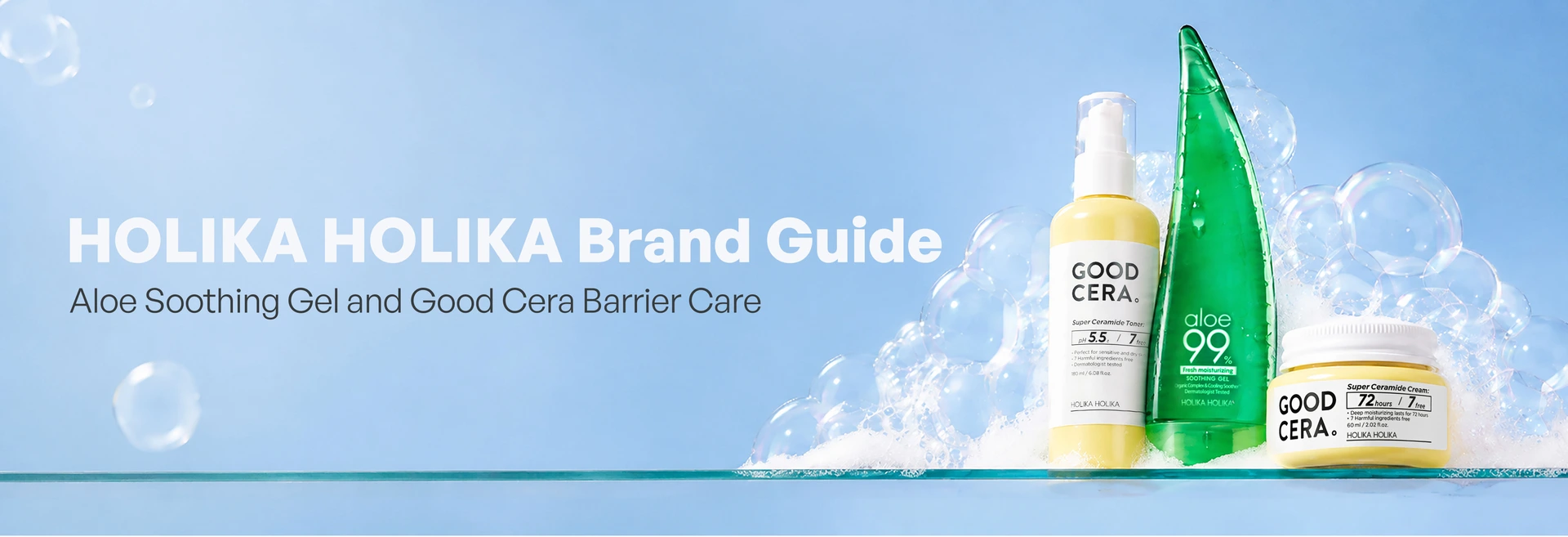

Walk into any Korean pharmacy, convenience store or Olive Young and you will find it within arm’s reach: a fat tub of clear green gel, priced somewhere between a coffee and a sandwich. Aloe vera is the least glamorous product in K-beauty. It is also one of the few that almost never leaves the shelf.
That staying power is worth examining. Aloe has survived every trend cycle Korean skincare has produced over the past two decades, from ten-step maximalism to the current appetite for short, ingredient-literate routines. It has no viral campaign behind it and no clinical mystique. It simply does a small number of useful things reliably, which turns out to matter more than novelty.
Why aloe sits at the centre of Korean skincare culture
Korean summers are humid, long and punishing on skin, and Korean households have treated after-sun care as a routine rather than a remedy for decades. The aloe gel tub became the family product: one container shared by everyone, used on the face, the shoulders, the back of the neck, the calves after a long day outdoors, and occasionally on a scalp left tight by too much sun.
That practicality shaped the format. Korean aloe products are built for frequency and volume rather than preciousness, which is why the category leans toward large sizes, water-light textures and multi-use claims. Western aloe products tend to be sold as a single-purpose after-sun treatment. Korean ones are sold as an everyday layer you reach for the way you reach for lip balm.
The new generation has refined that idea rather than abandoned it. Modern Korean aloe formulas pair the plant with the ingredients K-beauty now reaches for by default, centella asiatica, panthenol, hyaluronic acid and cica derivatives, so the soothing job is shared rather than carried by aloe alone.
What aloe actually does, without the mythology
Aloe vera leaf juice is roughly 99% water, which explains most of what people love about it. Applied to skin it delivers immediate surface hydration and a genuine cooling sensation, largely because the water evaporates and draws heat with it. For skin that feels hot after sun exposure, a workout or a long commute, that effect is real and it is pleasant.
The remaining fraction contains polysaccharides, minerals and a small set of plant compounds that have been studied for calming and antioxidant activity. The honest summary is that aloe is a competent moisturising and soothing ingredient rather than a treatment. It will not fade pigmentation or remodel texture. What it does well is bring comfort to skin that is already irritated, and do it without the sting that heavier actives can cause.
That profile makes aloe unusually compatible. It layers under almost anything, rarely triggers reactive skin, and works on the body as happily as on the face. It is also why aloe is a poor candidate for the highest concentration claim on the shelf. A 99% gel and a 90% gel will feel broadly similar in use, and the difference between leaf juice, leaf water and leaf extract matters more than the number printed on the front.
Leaf juice is the pressed liquid and carries the most of the plant’s water-soluble content. Leaf water is a distilled or diluted version used as a base. Leaf extract is a concentrated preparation that appears far lower on the ingredient list. Reading which one leads a formula tells you more about intent than any percentage.
The everyday gel layer
The classic multi-use gel remains the best entry point, and the two strongest examples on the shelf take noticeably different routes.
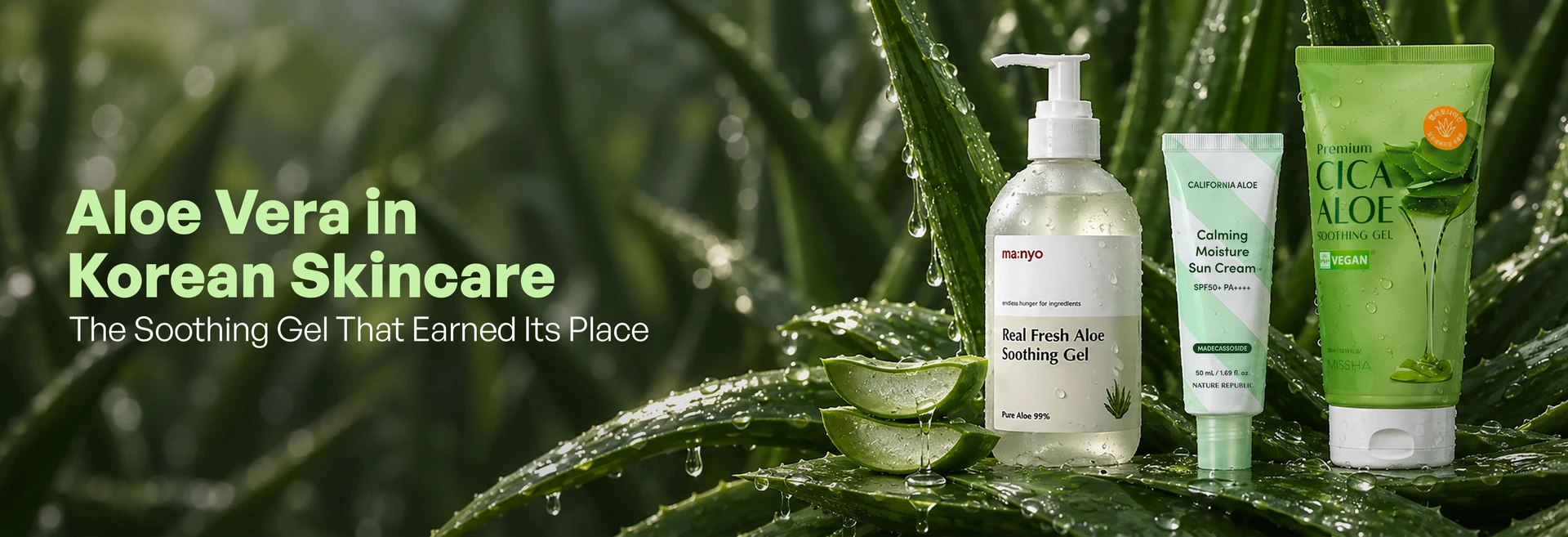
ma:nyo Real Fresh Aloe Soothing Gel is built around 90% fresh aloe juice sourced on Jeju, then rounded out with sodium hyaluronate, panthenol, beta-glucan and licorice root water. The result is a gel that feels a little cushioned rather than purely watery, which makes it comfortable on dry or reactive skin and generous enough for the whole family. Keep it in the fridge in summer and it becomes the most-used product in the house.
Isntree Aloe Soothing Gel Moisture Type takes its 80% aloe from California-grown leaf juice and leans harder into hydration, adding several weights of hyaluronic acid, betaine, trehalose and a centella, green tea and licorice supporting blend. It is the better choice for skin that flares with dehydration, particularly the tight, crepey feeling that appears indoors under air conditioning.
Use either one as a light moisturising layer in warm weather, as a soothing mask when you apply a thick layer and leave it for ten minutes, or simply as the product you reach for when everything else stings.
Aloe meets cica
If the plain gel is the entry point, the cica-aloe hybrid is where the category has genuinely improved. Centella asiatica and its isolated compounds have become the backbone of Korean calming care, and pairing them with aloe produces a formula that addresses both the heat and the reactivity that follow irritation.
MISSHA Premium Cica Aloe Soothing Gel is a clean example. Aloe leaf extract leads, centella asiatica extract follows, and hyaluronic acid, glycerin and allantoin fill out the humectant and comfort side. It carries a 100% vegan certification, absorbs without the tacky film that older aloe gels were known for, and works equally well on face and body. For skin that turns red easily, this is a more interesting product than the mono-ingredient gels it sits beside.
Formats for the way you actually use it
Two formats deserve a place in the routine because they solve a specific problem rather than duplicating the tub.
TONYMOLY Aloe 93% Moisture Soothing Gel Mist is the one to keep on a desk or in a bag. Aloe leaf water leads the formula, supported by centella asiatica, sodium hyaluronate and hyaluronic acid, and the fine mist lands as a soft, cooling layer over makeup or over a bare face that has spent too long in dry indoor air. It is the fastest way to take the edge off midday.
The Face Shop Aloe Hyaluronic Acid Moisture Soothing Serum moves aloe into a treatment texture. Jeju aloe water carries the soothing side while hyaluronic acid does the deeper hydrating work, and the jelly serum is designed to draw moisture through the upper layers of the skin rather than sit on the surface. If you find that a gel disappears too quickly on its own, this is the product that fills the gap beneath a moisturiser.
Aloe that protects and aloe that rests
The two most useful extensions of the category both take aloe somewhere you might not expect.
Nature Republic California Aloe Calming Moisture Sun Cream [SPF50+/PA++++] is the sunscreen for people who find daily SPF irritating. It pairs high protection with a moisturising cream texture and an aloe-centred soothing base, aimed squarely at sensitive and dry skin. On reactive skin, a sunscreen that calms as it protects is worth more than one with a more elegant finish.
INNISFREE Aloe Energy Mask is the sheet mask for the end of a long week. The renewed formula leads with aloe leaf juice alongside sodium hyaluronate, centella asiatica and peony root extract, and delivers a short, concentrated dose of hydration and calm. Fifteen minutes, no decision-making, skin that feels less tired.
Building aloe into a routine
Aloe is a layer, not a routine, and it behaves best when you treat it that way.
After cleansing, apply aloe gel or serum to slightly damp skin so the humectants have water to hold. Follow with a moisturiser if your skin is dry, or stop there if it is not. In the morning, aloe sits comfortably under sunscreen; the mist is for topping up comfort during the day rather than replacing your SPF. In the evening, a thick layer of gel left on for ten minutes before your usual routine is the closest thing to a home spa treatment the category offers.
What aloe should not do is replace the products doing the heavy lifting. It will not exfoliate, it will not address pigmentation, and it will not stand in for a retinoid. Its value is that it makes all of those things easier to tolerate on skin that would otherwise complain.
That is the real reason the green tub never leaves the shelf. Aloe is not the product that changes your skin. It is the product that keeps your skin comfortable enough for everything else to work.